






When we think about building an emergency supply, our minds naturally drift to food: rows of canned beans, bags of rice, and stacks of freeze-dried meals. But if you are building out your provisions at nonperishables.com, you cannot afford to treat water as an afterthought.
Humans can survive for weeks without food, but under normal conditions, dehydration can become critical in just three days.
Relying on the municipal grid or thinking you can just fill up some old milk jugs is a dangerous strategy. To build a truly resilient home water reserve, you need to understand the logistics of structural storage, food grade materials, and long term maintenance. Here is the definitive guide to managing your water supply like a professional logistics planner.
1. Calculating Your True Liquid Baseline
The standard rule of thumb touted by casual emergency blogs is one gallon of water per person, per day. While this is a fine absolute minimum, it often fails to account for real world scenarios.
A truly functional baseline should be calculated using two distinct categories:
- Hydration: At least 0.5 gallons purely for drinking, which increases significantly in hot climates or during high stress physical exertion.
- Hygiene and Preparation: An additional 0.5 to 1 gallon for washing hands, basic sanitation, and rehydrating your dry non perishable foods like beans, rice, and dehydrated stews.
The Professional Standard: Aim for 1.5 gallons per person, per day as your operational metric. If you have pets, allocate an additional 1 quart per day for medium dogs and cats.
2. Choosing the Right Containers (Avoiding the Plastics Trap)
You should never store emergency water in flimsy, disposable containers like plastic grocery jugs or recycled soda bottles. These containers are made from thin polyethylene terephthalate (PET or PETE) or High Density Polyethylene (HDPE 2) designed for temporary commercial use. Over time, these plastics degrade, develop microscopic leaks, and leach chemical plasticizers into your water supply.
Instead, invest in dedicated, heavy duty storage vessels.
- Look for Food Grade Certification: Ensure any container you buy is explicitly rated as “Food Grade” and stamped with the HDPE 2 resin identification code. These containers are UV resistant, thick walled, and designed to prevent chemical leaching during long term storage.
- Vessel Sizes:
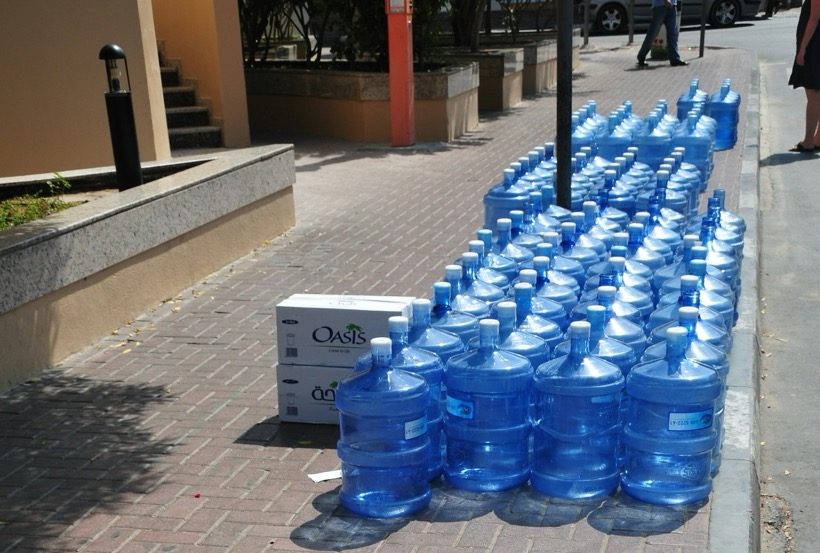
- Portability: 5 to 7 gallon jugs are ideal for easy transport and deployment.
- Stationary: 55 gallon drums are excellent for anchoring a structural home reserve in a garage or basement.
To see standard safety specifications on materials allowed to contact consumables, you can review the FDA regulations on food contact substances.
3. Container Preparation and Water Sources
Water does not technically expire, but stagnant water stored long term requires a clean environment to stay fresh. The easiest, safest, and most foolproof way to build your reserve without complex chemistry is to rely on pre-treated municipal tap water and clean, dedicated food-grade tools.
Pre-Cleaning Your Jugs
Before adding your water supply, wash the inside of your food-grade containers thoroughly with hot water and dish soap. Rinse the container multiple times until there is absolutely no soap residue left behind, and let it air-dry completely.
Selecting Your Source
Fill your clean containers using your home tap water if you are on a municipal city water system. City water is already professionally treated to prevent bacterial growth. If you rely on well water or untreated surface water, do not store it directly. Instead, purchase commercially sealed, pre-packaged emergency water blocks for your long term reserves.
4. The Rotation Schedule: Beating the “Stale” Taste
Even in a perfectly sealed, food grade container, stored water will eventually develop a flat, stale, or slightly plastic taste. This is not a sign of contamination; it happens because the dissolved oxygen slowly escapes the liquid over time.
- The Rotation Rule: Rotate your structural water reserves every 6 to 12 months. Use the old water to water your garden or flush toilets, rinse the containers, and refill them with fresh tap water.
- Fixing the Taste (Aeration): If you have to deploy your emergency stash and find the water tastes flat, simply pour it back and forth between two clean containers several times. This introduces oxygen back into the liquid, instantly removing the stale taste and making it taste fresh again.
5. Secondary Purification: The Final Line of Defense
No matter how pristine your storage setup is, a robust structural water plan requires a fallback filtration method. If a crisis extends past your stored volume, you will need to harvest water from secondary sources like rain barrels, streams, or swimming pools.
Do not rely on standard refrigerator pitchers or charcoal filters because these are designed merely to improve flavor, not remove dangerous pathogens.
Keep a high quality gravity fed purifier or a hollow fiber membrane filter capable of filtering down to 0.1 microns alongside your storage containers. Using a secondary filter ensures that even if your structural reserves run low, you can safely transform ambient environmental water into pure, bio secure hydration to accompany the shelf stable inventory in your pantry. For a deeper scientific dive into identifying water system disruptions and broader safety standards, consult the EPA safe drinking water standards.
By treating water as a structural asset by calculating exact loads, investing in the right plastics, and scheduling regular rotations, you turn nonperishables.com from a simple food repository into a complete blueprint for household self reliance.
📌 Additional Technical Notes
Note: If you are dealing with severely compromised water or wish to research chemical disinfection methods, you can view the official CDC emergency water disinfection guidelines for their approved chemical ratios.